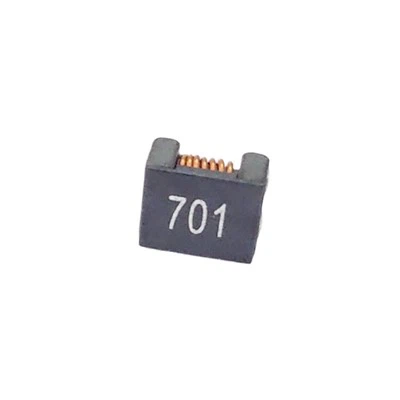
Hey there! As a drum inductor supplier, I often get asked about the materials used to make these nifty little components. So, let's dive right in and explore what goes into creating drum inductors.
Core Materials
The core is the heart of a drum inductor. It plays a crucial role in determining the inductor's performance. One of the most commonly used core materials is ferrite. Ferrite cores are made from a ceramic material that contains iron oxide mixed with other metal oxides. They have high magnetic permeability, which means they can store a large amount of magnetic energy. This makes them ideal for applications where high inductance values are required.
Another popular core material is powdered iron. Powdered iron cores are made by compressing iron powder into a specific shape. They offer a good balance between cost and performance. They have lower magnetic permeability compared to ferrite cores, but they can handle higher currents without saturating. This makes them suitable for power applications where high current handling is important.


Some drum inductors also use laminated cores. These cores are made by stacking thin layers of magnetic material, usually silicon steel. Laminated cores are known for their low eddy current losses, which makes them efficient at high frequencies. They are often used in applications such as transformers and high-frequency power supplies.
Wire Materials
The wire used in drum inductors is another important factor. Copper is the most common wire material due to its excellent electrical conductivity. It has low resistance, which means less energy is lost as heat when current flows through the wire. Copper wire also has good mechanical properties, making it easy to wind around the core.
Aluminum wire is sometimes used as an alternative to copper. It is lighter and less expensive than copper, but it has higher resistance. This means that aluminum wire may generate more heat compared to copper wire, especially at high currents. However, in some applications where weight and cost are more important than efficiency, aluminum wire can be a viable option.
Insulation Materials
Insulation is essential to prevent short circuits between the wire turns and to protect the inductor from environmental factors. One of the most commonly used insulation materials is enamel. Enamel is a thin coating that is applied to the wire during the manufacturing process. It provides electrical insulation and also protects the wire from corrosion.
Another insulation material is varnish. Varnish is a liquid that is applied to the inductor after it is wound. It dries to form a hard, protective coating that helps to hold the wire turns in place and provides additional insulation.
In some cases, plastic or rubber insulation may be used. These materials are often used in applications where the inductor needs to be protected from moisture or other harsh environmental conditions.
Encapsulation Materials
Encapsulation is the process of covering the inductor with a protective material to provide mechanical support and protection from the environment. One of the most common encapsulation materials is epoxy resin. Epoxy resin is a strong, durable material that can be molded into different shapes. It provides excellent protection against moisture, dust, and mechanical shock.
Another encapsulation material is plastic. Plastic encapsulation is often used in applications where a lightweight and cost-effective solution is required. Plastic can be easily molded into different shapes and colors, making it suitable for a variety of applications.
Our Product Range
At our company, we offer a wide range of drum inductors to meet the needs of different applications. Our CD Series 54 Inductors are designed for high-power applications. They feature a ferrite core and copper wire, which provides high inductance and low resistance. These inductors are suitable for use in power supplies, DC-DC converters, and other high-power applications.
Our CD Series 43 Inductors are ideal for applications where space is limited. They have a compact design and are available in a variety of inductance values. These inductors are suitable for use in mobile devices, laptops, and other small electronic devices.
We also offer CD Series 52 Inductors, which are designed for high-frequency applications. They feature a laminated core and copper wire, which provides low eddy current losses and high efficiency. These inductors are suitable for use in radio frequency (RF) circuits, wireless communication devices, and other high-frequency applications.
Contact Us for Procurement
If you're in the market for drum inductors, we'd love to hear from you. Our team of experts can help you choose the right inductor for your application and provide you with a competitive quote. Whether you need a small quantity for prototyping or a large quantity for production, we can meet your needs.
So, don't hesitate to reach out to us. We're here to help you find the best drum inductors for your project.
References
- "Magnetic Materials and Their Applications" by David Jiles
- "Inductor Design Handbook" by Colonel William T. McLyman