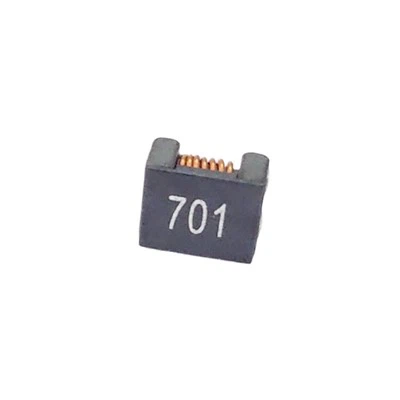
Yo, what's up everyone! As a supplier of unshielded inductors, I often get asked whether unshielded inductors can be used in power factor correction (PFC) circuits. So, I thought I'd write this blog to share my thoughts and insights on this topic.
First off, let's quickly go over what power factor correction is. In simple terms, power factor is a measure of how effectively electrical power is being used. A low power factor means that a significant amount of energy is being wasted, which can lead to higher electricity bills and put more stress on the electrical grid. Power factor correction circuits are designed to improve the power factor by reducing the reactive power in the system.
Now, let's talk about unshielded inductors. Unshielded inductors are, well, inductors without a shield. They're usually cheaper and have a simpler design compared to shielded inductors. But the big question is, can they cut it in PFC circuits?
Advantages of Using Unshielded Inductors in PFC Circuits
One of the main advantages of using unshielded inductors in PFC circuits is cost. Since they don't have the additional shielding material, they're generally more affordable. This can be a huge plus for manufacturers looking to keep their production costs down, especially when dealing with large - scale production.
Another advantage is their size. Unshielded inductors are often more compact, which is great for applications where space is limited. In modern electronic devices, where miniaturization is a big trend, the smaller size of unshielded inductors can be a real game - changer.


Unshielded inductors also have good thermal performance. Without the shield, heat can dissipate more easily, which helps in maintaining the inductor's performance over time. This is crucial in PFC circuits, where the inductor can generate a fair amount of heat during operation.
Disadvantages and Considerations
However, unshielded inductors also come with some drawbacks. The most obvious one is electromagnetic interference (EMI). Since they don't have a shield to contain the magnetic field, they can radiate electromagnetic energy, which can interfere with other components in the circuit or even other nearby electronic devices. This can be a major issue, especially in sensitive electronic systems.
Another consideration is the magnetic coupling. Unshielded inductors can interact with other magnetic components in the circuit, which can lead to unexpected behavior and affect the overall performance of the PFC circuit. This means that careful layout and design are required to minimize these interactions.
Real - World Applications
Despite the challenges, unshielded inductors are still used in many PFC applications. For example, in some consumer electronics like power adapters, where cost and size are the primary concerns, unshielded inductors can be a good choice. As long as the EMI can be managed through proper circuit design and shielding at the system level, unshielded inductors can work effectively.
Let's take a look at some of the products we offer. We have the CD Series 105 Inductors, which are great for PFC circuits in medium - power applications. These inductors are designed to provide good performance at an affordable price.
Our CD Series 32 Inductors are another option. They're more compact and can be used in applications where space is a premium. And for higher - power PFC circuits, we have the CD Series 54 Inductors, which offer high inductance values and good thermal stability.
Making the Decision
So, should you use unshielded inductors in your PFC circuit? It really depends on your specific requirements. If cost and size are your top priorities, and you can manage the EMI and magnetic coupling issues, then unshielded inductors can be a great choice. But if you're working on a high - end, sensitive electronic system where EMI is a major concern, you might want to consider shielded inductors instead.
If you're interested in learning more about our unshielded inductors or have any questions about using them in your PFC circuits, don't hesitate to reach out. We're here to help you make the right decision for your application. Whether you're a small - scale manufacturer or a large - scale electronics company, we can provide you with the right inductor solutions.
References
- "Power Electronics: Converters, Applications, and Design" by Ned Mohan, Tore M. Undeland, and William P. Robbins
- "Inductor Design Handbook" by Colonel William T. McLyman