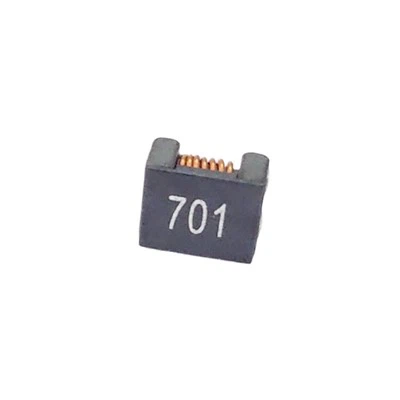
Hey there! As a supplier of magnetically shielded inductors, I often get asked whether these components are affected by radio frequency interference (RFI). It's a valid question, especially in today's world where electronic devices are everywhere, and RFI is a common issue. In this blog post, I'll dive into this topic and share some insights based on my experience in the industry.
First off, let's understand what magnetically shielded inductors are. These are inductors that have a special shielding mechanism to reduce the magnetic field leakage outside the component. The shielding is typically made of materials like ferrite or metal, which help contain the magnetic field within the inductor. This is important because a strong external magnetic field can interfere with the operation of other components in a circuit and vice versa.
Now, let's talk about radio frequency interference. RFI is essentially electromagnetic interference (EMI) that occurs in the radio frequency range, typically from a few kilohertz to several gigahertz. It can come from a variety of sources, such as radio transmitters, mobile phones, Wi-Fi routers, and even some electrical appliances. RFI can cause all sorts of problems in electronic circuits, including signal distortion, noise, and even complete malfunction.
So, are magnetically shielded inductors affected by RFI? The short answer is, it depends. While the shielding does provide some protection against RFI, it's not a foolproof solution. The effectiveness of the shielding depends on several factors, including the quality of the shielding material, the design of the inductor, and the frequency and strength of the RFI.
Let's start with the quality of the shielding material. A high - quality shielding material will have better magnetic properties, which means it can more effectively contain the magnetic field and block external RFI. For example, some ferrite materials have high magnetic permeability, which allows them to absorb and redirect the magnetic field. On the other hand, a low - quality shielding material may not provide adequate protection, and the inductor may still be susceptible to RFI.
The design of the inductor also plays a crucial role. A well - designed magnetically shielded inductor will have a proper shielding structure that covers the entire inductor core. This helps to minimize the leakage of the magnetic field and provides better protection against RFI. Additionally, the shape and size of the inductor can also affect its susceptibility to RFI. For instance, a larger inductor may have a larger magnetic field, which could potentially make it more vulnerable to RFI.
The frequency and strength of the RFI are also important factors. Higher - frequency RFI can be more difficult to block than lower - frequency RFI. This is because the shielding materials may not be as effective at higher frequencies. Similarly, a stronger RFI signal will be more likely to penetrate the shielding and affect the inductor.
In my experience, magnetically shielded inductors can provide a significant level of protection against RFI in most cases. However, in environments with extremely high levels of RFI, additional measures may be required. For example, using multiple layers of shielding or combining the inductor with other RFI filtering components can help to further reduce the impact of RFI.
At our company, we offer a range of magnetically shielded inductors, such as the 12575 Inductors, 7032 Inductors, and 7045 Inductors. These inductors are designed with high - quality shielding materials and advanced manufacturing techniques to provide excellent protection against RFI.
If you're in the market for magnetically shielded inductors and are concerned about RFI, I'd be more than happy to discuss your specific requirements. We can help you choose the right inductor for your application and provide you with all the technical support you need. Whether you're working on a small - scale project or a large - scale industrial application, we've got you covered.


In conclusion, while magnetically shielded inductors can be affected by RFI, proper design and high - quality shielding can significantly reduce the impact. By understanding the factors that affect the susceptibility of these inductors to RFI, you can make informed decisions when selecting the right components for your electronic circuits.
If you have any questions or would like to learn more about our magnetically shielded inductors, feel free to reach out. We're here to help you find the best solutions for your RFI - related challenges.
References
- Electromagnetic Compatibility Engineering by Henry W. Ott
- Inductor Design Handbook by Colonel William T. McLyman